

How to Squat with Perfect Form: A Step-by-Step Guide for Every Level
The squat is the most important exercise you can do. Here's how to do it safely, which common mistakes destroy your knees, and how to progress from zero to a loaded barbell.

The squat is often called the king of all exercises — and for good reason. No other movement builds lower body strength, muscle, and functional power as efficiently. But it's also one of the most commonly butchered exercises in the gym, leading to wasted progress and unnecessary injury. Here's how to do it right.
The Muscles the Squat Works
The squat is a compound movement that trains your entire lower body and core simultaneously.
- •Quadriceps (front of thigh) — primary mover, especially during the upward phase
- •Glutes — heavily activated at the bottom of the squat and during hip extension
- •Hamstrings — active as stabilizers and during hip extension
- •Adductors (inner thigh) — especially active in wide-stance squats
- •Core and spinal erectors — work isometrically throughout to maintain an upright torso
- •Calves — contribute to stability, especially at the bottom
The Setup: Before You Unrack a Single Rep
Most squat mistakes happen before the bar leaves the rack. Get the setup right and the movement follows.
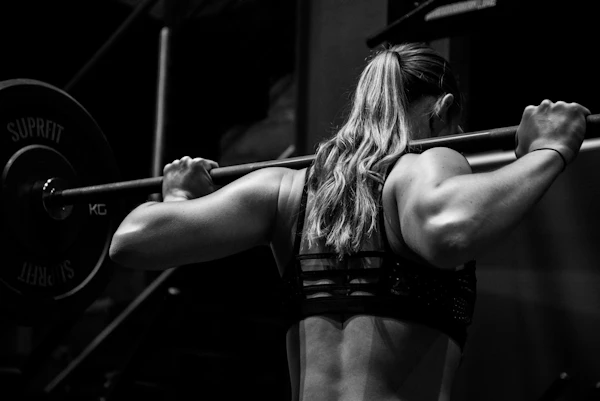
- •Bar position: High bar (resting on upper traps) suits most beginners and develops more quad strength. Low bar (resting on rear delts, lower on the back) allows more hip involvement and generally lets you squat more weight
- •Stance: Stand with feet roughly shoulder-width apart, toes turned out 15–30 degrees. Your exact ideal stance depends on hip anatomy — experiment until you feel balanced and can reach depth without pain
- •Grip: Grip the bar just outside shoulder width. Pull it down into your traps actively — this creates a 'shelf' and keeps the bar from sliding
- •Brace: Take a deep breath into your belly (not your chest), brace your core as if you're about to take a punch, and hold that brace throughout the descent and ascent

The Descent: How to Squat Down
Initiate the movement by breaking at the hips and knees simultaneously — not by sitting straight down and not by pushing your knees forward first. Think: hips back AND down.
- •Keep your chest up and torso as upright as your mobility allows
- •Push your knees out in the direction of your toes — they should not cave inward at any point
- •Reach depth: at minimum, hit parallel (thighs parallel to the floor). Full depth (hips below knees) is better for glute development if your mobility allows
- •Keep your weight distributed through your whole foot — heel, midfoot, and ball of foot all in contact with the ground
The Ascent: Driving Back Up
Push the floor away from you. Drive your feet into the ground and think about 'pushing the floor apart' with your feet — this cue naturally keeps the knees tracking out. Lead with your chest, not your hips. The most common mistake on the way up is the 'good morning squat' where the hips shoot up first while the chest drops — this transfers load to your lower back.
The 5 Most Common Squat Mistakes
- •Knees caving inward (valgus collapse): Caused by weak glutes and adductors. Cue: push knees out aggressively. Fix: add goblet squats and banded squats to train this pattern
- •Heels rising: Caused by limited ankle mobility. Fix: elevate heels slightly (plates under heels) while working on ankle flexibility with daily calf stretches
- •Forward torso lean: Excessive lean is often caused by limited hip mobility or a stance that doesn't match your anatomy. Fix: widen stance slightly and work on hip flexor mobility
- •Half reps: Stopping well above parallel limits glute and quad development and is also harder on the knees. Reach at least parallel on every rep
- •Breath held incorrectly: Exhaling during the descent or at the bottom releases intra-abdominal pressure and destabilizes your spine. Brace before descent, exhale after completing the rep
Squat Progressions: From Beginner to Barbell
- •Step 1 — Bodyweight squat: Master the movement pattern before adding load. 3×15 daily until depth and knee tracking are solid
- •Step 2 — Goblet squat: Hold a dumbbell or kettlebell at your chest. The counterbalance makes it easier to stay upright and reach depth. 3×10–12
- •Step 3 — Front squat or safety bar squat: Develops the torso positioning needed for the barbell back squat
- •Step 4 — Low-load barbell back squat: Start with just the bar (20 kg / 45 lbs). Prioritize form across 4×8 before adding weight
- •Step 5 — Progressive overload: Add 2.5–5 kg per session as long as form holds. For beginners, linear progression works for months
How Often to Squat
Beginners benefit from squatting 3x per week — the high frequency accelerates the learning of the movement pattern and drives rapid strength gains. Intermediate lifters typically squat 2x per week within a structured program. Advanced lifters may squat as frequently as 4–5x per week using varied intensities and volumes.
The Bottom Line
The squat is a skill before it is a strength exercise. Invest the time to learn it properly — the depth, the brace, the knee tracking, the torso position. Do this and the squat will build your legs, glutes, and core more effectively than any other exercise. Rush the technique and you'll hit a plateau (or an injury) far sooner than necessary. YourFit tracks your squat progression automatically, showing you your volume and intensity trends over time so you always know when to push and when to back off.
Related Articles


Put This Into Practice with YourFit
Log every set, track your progression, and let AI plan your next session automatically. Available now on iOS and Android.