

How to Bench Press with Proper Form (And Finally Break Through Plateaus)
The bench press is the most popular exercise in the gym. Here's how to actually do it correctly — the setup most people skip, the 5 mistakes costing you strength, and how to keep progressing.

Every Monday, gyms fill with people bench pressing. Most of them are leaving significant strength and muscle on the table because of setup mistakes that are easy to fix. The bench press rewards attention to detail more than almost any other exercise — a proper setup can add 20 lbs to your press before you've built a single gram of new muscle.
What the Bench Press Trains
- •Pectorals (chest) — the primary mover, particularly the mid and lower chest on a flat bench
- •Anterior deltoids (front shoulders) — contribute significantly, especially at the top of the range of motion
- •Triceps — essential for locking out the bar at the top
- •Serratus anterior and rotator cuff — stabilize the shoulder throughout the movement
The Setup That Most People Skip
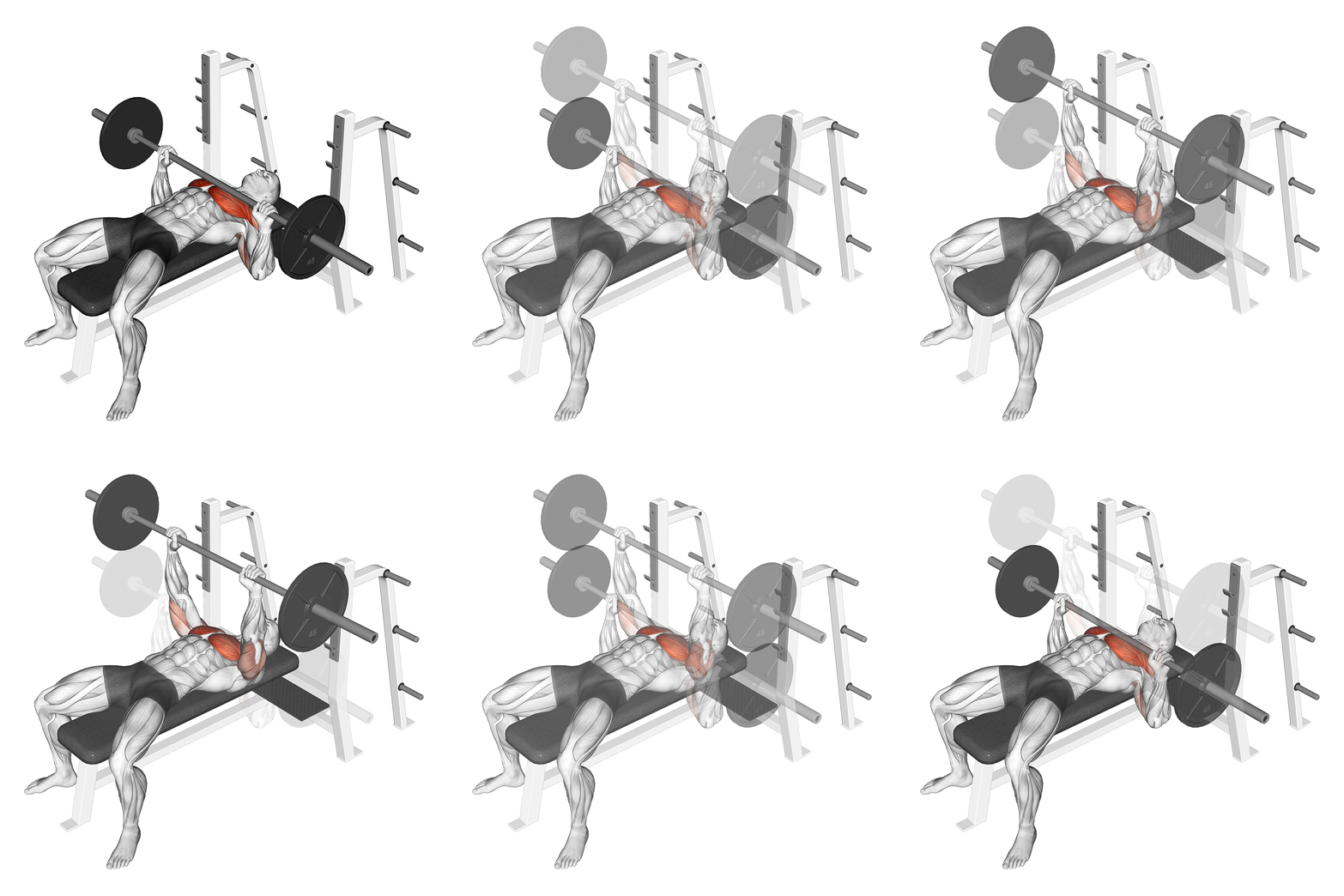
The bench press is a full-body exercise, not just a chest exercise. The force chain runs from your feet through your legs, hips, back, and into your arms. Every point of contact matters.
- •Foot position: Feet flat on the floor (or on a plate if you're shorter). Drive your feet into the ground — this creates leg drive that adds stability and force
- •Retract your shoulder blades: Before you unrack, pull your shoulder blades down and together as if you're trying to put them in your back pockets. This protects your shoulders and creates a stable base
- •Natural arch: A small natural lower back arch is fine and helps protect the shoulder joint. You should be able to slide your hand under your lower back but not your forearm
- •Grip width: Roughly 1.5–2x shoulder width. A grip that's too narrow overloads the triceps; too wide over-stresses the shoulder joint. Your forearms should be vertical or slightly angled when the bar is at your chest

The Movement: Descent and Press
- •Unrack with locked-out elbows, bring the bar directly over your chest, then lower with control
- •Lower the bar to your lower chest (roughly nipple line) — not your neck or upper chest
- •Tuck your elbows: Elbows should be 45–75 degrees from your torso, not flared out at 90 degrees (which destroys your rotator cuff) and not fully tucked (which transfers the load entirely to triceps)
- •Touch and press: The bar should lightly touch your chest and immediately be pressed back up. Don't bounce or pause excessively (unless you're training for powerlifting)
- •Press the bar in a slight arc — not straight up, but up and slightly back toward the rack as you lock out
The 5 Mistakes Killing Your Bench
- •Elbows flared at 90 degrees: The fastest route to shoulder impingement. Your anterior deltoid takes a beating in this position. Tuck to 45–60 degrees
- •Bar too high on the chest: Touching near the clavicle instead of the lower chest puts your shoulder in a compromised position and reduces power. Lower the bar's touch point
- •Lifting your butt off the bench: This converts your flat bench to an incline press, making the lift easier but defeating the purpose. Keep contact with the bench throughout
- •No leg drive: Treating the bench as an upper-body-only movement wastes a powerful stability mechanism. Plant your feet and actively push into the floor
- •Ego weight: Partial reps with too much weight train nothing effectively. Full range of motion with controlled weight builds more muscle and keeps your shoulders healthy
How to Break Through a Bench Plateau
- •Pause reps: Pause the bar on your chest for 1–2 seconds before pressing. This eliminates the elastic rebound and forces true strength at the bottom
- •Close-grip bench: Shifts emphasis to the triceps — often the limiting factor in lockout. Use 60–70% of your normal bench weight
- •Pin press: Start the bar from the pins in a power rack at chest height. Builds starting strength with no elastic energy
- •Overhead press: Directly builds shoulder strength and tricep lockout power — both essential for the bench
- •Increase upper back strength: A stronger upper back means a more stable base. Add rows, face pulls, and rear delt work
Programming the Bench Press
For most intermediate lifters, bench pressing 2x per week produces the best results — one heavier session (3–5 rep range) and one volume session (6–12 rep range). Each session should include supplementary work for the shoulders and triceps. Triceps are typically the limiting factor for natural lifters, so face pulls, lateral raises, and tricep-focused work should never be neglected.
The Bottom Line
The bench press is worth learning well. A proper setup — feet driving into the floor, shoulder blades retracted, natural arch, correct grip width, and controlled elbows — produces more strength and less injury risk than any amount of raw effort with poor technique. Fix your setup, and your bench will improve immediately.
Related Articles


Put This Into Practice with YourFit
Log every set, track your progression, and let AI plan your next session automatically. Available now on iOS and Android.