

Dumbbell Seated Alternate Shoulder
What is the Dumbbell Seated Alternate Shoulder?
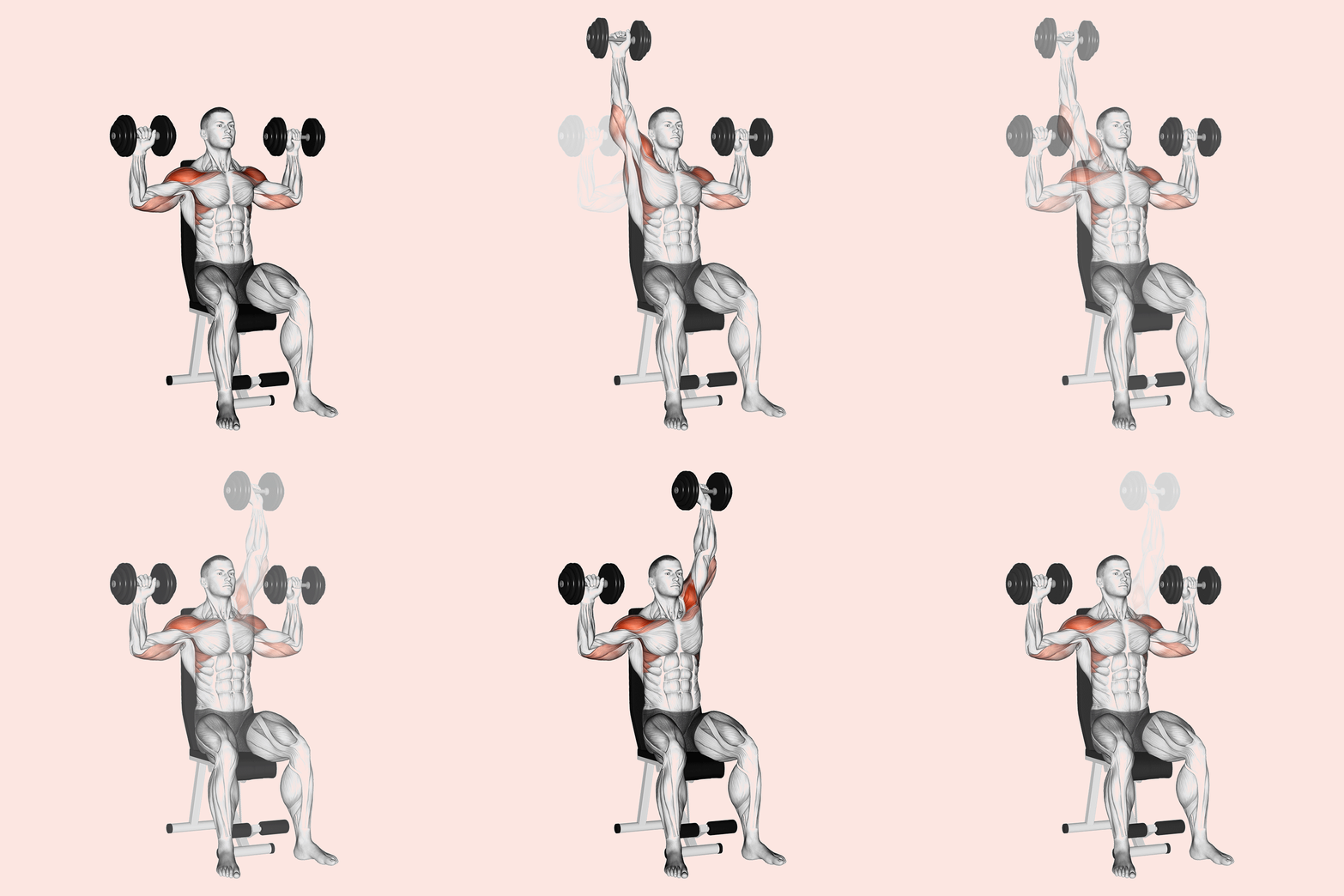
The Dumbbell Seated Alternate Shoulder is an isolation exercise that targets the shoulders (deltoids), with help from the triceps and upper back, done using dumbbells.
The dumbbell seated alternate shoulder press is a strength exercise targeting the deltoids, performed while seated and alternating arms for each press. It also engages the triceps and upper back as secondary muscles.
How to do the Dumbbell Seated Alternate Shoulder
- 1
Sit on a bench with your back straight and feet flat on the ground.
- 2
Hold a dumbbell in each hand, palms facing inwards, and raise them to shoulder height.
- 3
Press one dumbbell up overhead while keeping the other dumbbell at shoulder height.
- 4
Lower the raised dumbbell back to shoulder height while simultaneously pressing the other dumbbell up overhead.
- 5
Continue alternating between arms for the desired number of repetitions.
Dumbbell Seated Alternate Shoulder Muscles Worked
The primary muscle group worked during the Dumbbell Seated Alternate Shoulder is the shoulders (deltoids). Secondary muscles including the triceps and upper back assist throughout the movement, contributing to stability and force production.
- Primary muscle
- Shoulders (Deltoids)
- Secondary muscles
- Triceps, Upper Back
- Body part
- Shoulders
- Movement type
- Isolation
- Equipment needed
- Dumbbells, plus a flat bench.
Sets and reps for the Dumbbell Seated Alternate Shoulder
The Dumbbell Seated Alternate Shoulder is an isolation exercise: it trains the shoulders on their own, so moderate weights and controlled reps work better than very heavy sets. Do it after your compound lifts.
| Goal | Sets | Reps | Rest |
|---|---|---|---|
| Strength | 3 to 4 | 6 to 10 per side | 90 sec to 2 min |
| Muscle growth | 3 to 4 | 10 to 15 per side | 60 to 90 sec |
| Endurance | 2 to 3 | 15 to 25 per side | 30 to 60 sec |
- Progress with double progression: once you reach the top of the rep range on every set, move to the next dumbbell (usually 1 to 2.5 kg or 2.5 to 5 lb heavier) and work back up.
- Work one side at a time and start with your weaker side, so it sets the number of reps for both.
- For muscle growth, about 10 to 20 hard sets per muscle per week works for most people, counting every exercise that trains the shoulders.
- New to the Dumbbell Seated Alternate Shoulder? Spend the first 2 to 3 weeks in the muscle growth range with a load you could lift 2 or 3 more times, then try heavier sets.
Dumbbell Seated Alternate Shoulder Alternatives
These exercises also train the shoulders, each with different equipment, so you can swap one in when your gym is busy, you train at home or you want a change.
- Barbell Seated Overhead PressBarbellNo dumbbells? A barbell lets you load the most weight and add it in small steps, which suits strength work.
- Cable Lateral RaiseCableNo dumbbells? The cable keeps tension on the shoulders through the whole range of motion.
- Lever Lateral RaiseLeverage MachineNo dumbbells? The machine guides the path, so you can push hard safely without a spotter.
- Kettlebell Seated PressKettlebellNo dumbbells? The kettlebell's offset weight adds a grip and stability challenge.
- Resistance Band Seated Shoulder PressResistance BandNo dumbbells? A band is light and portable, good for home workouts, travel or warm-up sets.
Exercises That Pair Well With the Dumbbell Seated Alternate Shoulder
For a short push workout, start with the heavier compound lift below, then do 2 to 3 sets of the others and finish with the Dumbbell Seated Alternate Shoulder.
More Shoulders Exercises
- Dumbbell Seated Bent Arm Lateral Raise · Dumbbell
- Dumbbell Seated Shoulder Press · Dumbbell
- Dumbbell Side Lying One Hand Raise · Dumbbell
- Dumbbell Single Arm Overhead Carry · Dumbbell
- Dumbbell Standing Alternate Overhead Press · Dumbbell
- Dumbbell Standing Around World · Dumbbell
Track the Dumbbell Seated Alternate Shoulder in YourFit
- Log sets, reps and weight in a few taps, with your previous sets for the Dumbbell Seated Alternate Shoulder shown next to each one.
- New personal records are flagged automatically, so you know when you beat your best.
- See your strength level, plus how many weekly sets each muscle gets, including the shoulders.