


Bodyweight Standing Row
What is the Bodyweight Standing Row?
The Bodyweight Standing Row is a compound strength exercise that targets the upper back, with help from the biceps and shoulders, done using only your body weight.
The bodyweight standing row is a back exercise that targets the upper back using only body weight for resistance. It also engages the biceps and shoulders as secondary muscles. The movement involves pulling a bar or handles towards the body while standing, focusing on squeezing the shoulder blades together.
How to do the Bodyweight Standing Row
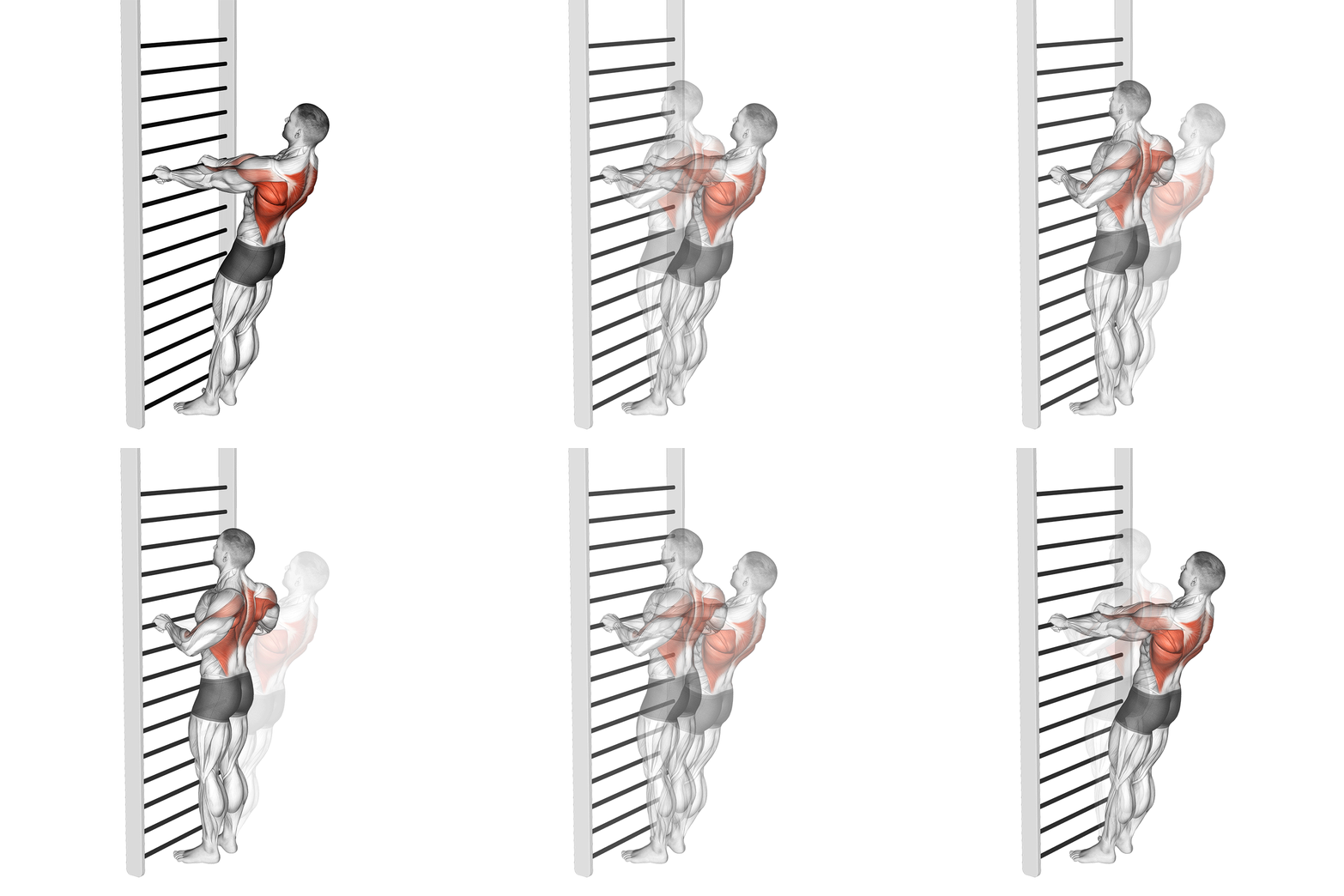
- 1
Stand with your feet shoulder-width apart and knees slightly bent.
- 2
Grasp a bar or handles with an overhand grip, palms facing down.
- 3
Keep your back straight and core engaged.
- 4
Pull the bar or handles towards your body, squeezing your shoulder blades together.
- 5
Pause for a moment at the top of the movement.
- 6
Slowly release and extend your arms back to the starting position.
- 7
Repeat for the desired number of repetitions.
Bodyweight Standing Row Muscles Worked
The primary muscle group worked during the Bodyweight Standing Row is the upper back. Secondary muscles including the biceps and shoulders assist throughout the movement, contributing to stability and force production.
- Primary muscle
- Upper Back
- Secondary muscles
- Biceps, Shoulders
- Body part
- Back
- Movement type
- Compound
- Equipment needed
- No equipment needed: just your body weight.
Sets and reps for the Bodyweight Standing Row
The Bodyweight Standing Row is a compound bodyweight exercise: several joints and muscles work together, so you progress by adding reps, slowing the tempo or moving to a harder version rather than adding plates.
| Goal | Sets | Reps | Rest |
|---|---|---|---|
| Strength | 3 to 5 | 3 to 8 (add weight or use a harder version) | 2 to 3 min |
| Muscle growth | 3 to 4 | 8 to 15 | 60 to 90 sec |
| Endurance | 2 to 3 | 15+, or as many clean reps as you can | 30 to 60 sec |
- To progress, add reps first, then slow the lowering phase to about 3 seconds, pause at the hardest point, or move to a harder variation.
- For muscle growth, about 10 to 20 hard sets per muscle per week works for most people, counting every exercise that trains the upper back.
- New to the Bodyweight Standing Row? Start with 2 to 3 sets, ending each set 2 or 3 reps before your form breaks down, and add a rep or two each week.
Bodyweight Standing Row Alternatives
These exercises also train the upper back, each with different equipment, so you can swap one in when your gym is busy, you train at home or you want a change.
- Dumbbell One Arm Bent-Over RowDumbbellWant more resistance? Dumbbells train each side on its own, which helps even out strength differences.
- Band One Arm Standing Low RowBandA band is light and portable, good for home workouts, travel or warm-up sets.
- Kettlebell Alternating RowKettlebellWant more resistance? The kettlebell's offset weight adds a grip and stability challenge.
- Cable Seated RowCableWant more resistance? The cable keeps tension on the upper back through the whole range of motion.
- Lever Seated RowLeverage MachineWant more resistance? The machine guides the path, so you can push hard safely without a spotter.
- Barbell Bent Over RowBarbellWant more resistance? A barbell lets you load the most weight and add it in small steps, which suits strength work.
Exercises That Pair Well With the Bodyweight Standing Row
For a short pull workout, do the Bodyweight Standing Row first while you are fresh, then 2 to 3 sets of each of these.
More Upper Back Exercises
- Cable Decline Seated Wide-Grip Row · Cable
- Cable Floor Seated Wide-Grip Row · Cable
- Cable High Row (Kneeling) · Cable
- Cable Incline Bench Row · Cable
- Cable Low Seated Row · Cable
- Cable One Arm Bent Over Row · Cable
Track the Bodyweight Standing Row in YourFit
- Log sets, reps and weight in a few taps, with your previous sets for the Bodyweight Standing Row shown next to each one.
- New personal records are flagged automatically, so you know when you beat your best.
- See your strength level, plus how many weekly sets each muscle gets, including the upper back.